
Buying Recreational Land in Montana: What Every Out-of-State Buyer Needs to Understand

Recreational/Residential Land off of Swingley Road in Livington Montana
There is a reason people start looking at Montana and cannot stop. Maybe it was a trip through Paradise Valley that did it, or a photo of a meadow backed by snowcapped peaks, or just the quiet realization that life could look and feel completely different. Whatever sparked the search, the pull toward Montana recreational land is real, and it is strong.
The good news is that the dream holds up. Montana delivers exactly what people hope it will. But the process of buying land here is different from buying property almost anywhere else in the country. That is not a warning. It is an invitation to come prepared, because buyers who understand what they are getting into end up with properties they love for decades.
What you need to know before buying: Recreational land in Montana ranges from small hunting parcels to multi-hundred-acre spreads bordering national forest. Water rights are separate from land ownership and must be verified before closing. Access, zoning, and financing all work differently here than in most states. The ongoing cost of ownership is generally lower than comparable western states, but buyers who understand the details upfront make better decisions and close with confidence.
What Counts as Recreational Land in Montana?
Recreational land in Montana includes any property purchased primarily for outdoor use, such as hunting, fishing, horseback riding, off-grid living, or seasonal retreat. It might be a timbered hunting parcel in the foothills, a riverside tract with blue-ribbon trout access, an off-grid retreat with a cabin and a well, or horse property with enough acreage to ride without crossing a fence line. Some buyers want a seasonal escape. Others want a place to build a legacy property their family will use for generations.
What recreational land is not, at least in Montana, is a manicured subdivision with HOA rules and paved walking trails. That is part of the appeal. The land here is raw, varied, and unapologetically wild. Parcels range from five acres tucked against a creek to multi-hundred-acre spreads bordering national forest. The diversity of what is available is one of the things that makes Montana stand apart from every other western state.
Why Does Montana Keep Drawing People In?
Montana is one of the last places in the American West where buyers can find genuine privacy, genuine solitude, and genuine access to public land. The state holds roughly 30 million acres of public land, much of it open for hunting, fishing, hiking, and horseback riding. The sportsmen's culture here is not a marketing pitch. It is a way of life that has been passed down through generations and is deeply respected.
Beyond the recreation, there is the landscape itself. Within a short drive in any direction, the terrain can shift from river bottom to alpine meadow to rolling prairie. The wildlife is not something you see on occasion. Elk, deer, moose, eagles, and the occasional bear are regular neighbors. The night sky is dark enough to see the Milky Way from your porch.
And then there is the community. Montana's small towns still function the way small towns are supposed to. People know each other. They help each other. The pace of life is slower, but the quality of life is higher in ways that are hard to quantify until you have experienced it firsthand.
What Do Out-of-State Buyers Need to Know About Water Rights in Montana?
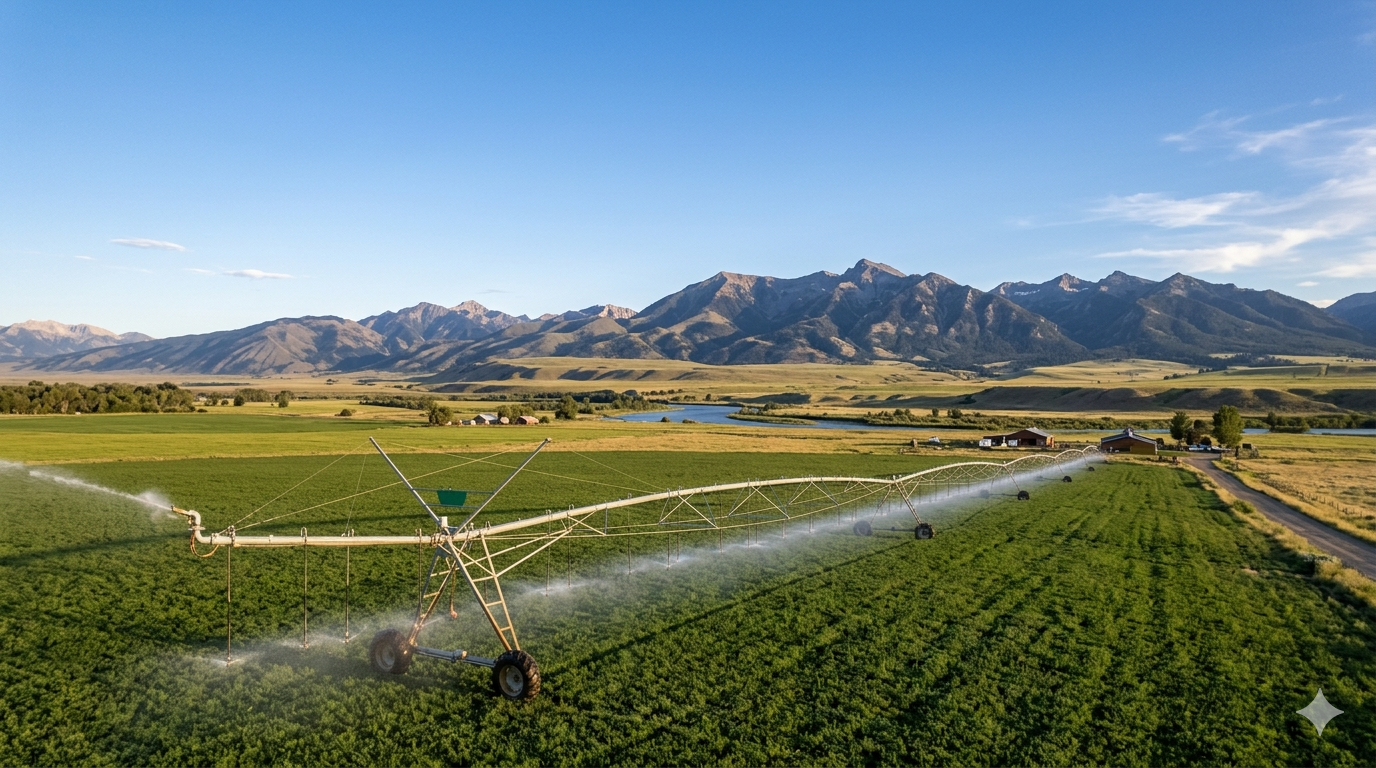
Irrigation in a pasture
Water rights in Montana are legally separate from land ownership, which means owning a property with a creek running through it does not automatically grant the right to use that water. This is the topic that surprises out-of-state buyers more than any other, and understanding it before making an offer is essential.
What does this mean practically? It affects whether you can drill a well, irrigate a pasture, water livestock, or divert from a stream. Montana uses a prior appropriation system, which means older water rights have priority over newer ones. During drought years, that priority matters.
This should not scare anyone away from buying. The vast majority of recreational properties have the water access buyers need, whether through an existing well, a permitted spring, or adjudicated water rights. The key is knowing what you have before you close. A buyer who asks the right water questions early in the process is a buyer who avoids surprises later.
How Do Access and Easements Affect Montana Land Purchases?
Access is one of the most critical factors in any Montana land purchase because not every parcel that looks accessible on a map has legal, year-round access. Some properties are landlocked, meaning there is no deeded right-of-way to reach them from a public road. Others have legal access that is physically challenging during certain seasons.
A few things every buyer should investigate before making an offer:
Whether the property has deeded legal access or relies on a prescriptive or permissive easement
The condition of the access road in spring mud season and winter snow
Whether the road is maintained by the county, a road association, or the property owner
How far the property sits from the nearest paved road and what that drive looks like in February
Seasonal road limitations are normal in Montana and most buyers who choose remote property come to love the trade-off. When the road gets rough, the crowds disappear. That is part of the appeal. But understanding what access looks like in every season before you buy is essential.
What Can You Build on Recreational Land in Montana?
Montana does not have a statewide zoning code, giving landowners more building freedom than most western states. Land use regulation varies significantly by county. Some counties have very limited zoning restrictions, while others have adopted more detailed land use plans. In general, Montana is more permissive than most buyers expect.
County-level rules still apply, however, and they cover important details:
Septic system requirements and soil percolation testing
Building setbacks from property lines and waterways
Floodplain designations that may restrict where a structure can be placed
Subdivision review requirements if you plan to split the property in the future
The Montana Department of Environmental Quality oversees septic permitting statewide, and most counties require a septic permit before a building permit will be issued. For buyers planning to build, understanding the septic requirements early prevents delays and unexpected costs.
The bottom line is that Montana offers more building freedom than most states, which is one of its strongest selling points. A little due diligence on the front end ensures you can do what you want with the land you buy.
Can You Finance Raw Land in Montana?
Yes, but financing recreational land works differently than a conventional home mortgage. Most traditional lenders do not offer standard 30-year mortgages on raw land. Instead, buyers typically encounter land loans with shorter terms, higher interest rates, and larger down payment requirements, often 20 to 35 percent.
Several financing paths are available to Montana land buyers:
Local and regional banks that specialize in agricultural and land lending
Farm Credit Service lenders with programs designed for rural property
Seller financing, which is more common in Montana than many buyers realize
Cash purchases, which remain the most straightforward path and are common in the recreational land market
Financing is not a barrier. It is simply a different structure than what most buyers are used to. Buyers who come with their financing lined up, or at least a clear understanding of their options, move faster and compete better when the right property comes along.
What Does It Actually Cost to Own Recreational Land in Montana?
The ongoing cost of owning recreational land in Montana is generally lower than comparable western states. Property taxes on agricultural and recreational land are modest by national standards, and Montana has no state sales tax.
Beyond the purchase price, here is what buyers should budget for:
Property taxes, which on raw land and agricultural parcels tend to be very reasonable
Fencing, which is both a practical necessity and a legal consideration in Montana's open range counties
Road maintenance, especially for properties accessed by private or unimproved roads
Well and septic maintenance for properties with these systems
Fire mitigation on timbered parcels, including defensible space clearing
Snow removal if the property is used year-round and accessed by an unpaved road
None of these costs are unusual or excessive, and most buyers find that the total cost of ownership in Montana compares favorably to what they were paying in the state they left. The key is going in with realistic expectations so there are no surprises after closing.
Why Does Working With a Local Montana Broker Matter?
Working with a local broker matters because recreational land does not show well on a screen, and the details that determine whether a property is right for a buyer require firsthand knowledge of the area. This is not a sales pitch. It is a practical reality of buying in a state where the landscape, the regulations, and the culture are unlike anywhere else.
Photos cannot tell you about the soil composition, the wind exposure on a ridgeline, the snow load at a particular elevation, or whether the neighbor runs cattle that will push through a weak fence line. A listing description cannot explain how the creek behaves during spring runoff or whether the south-facing slope holds snow into June.
A broker who has walked the property, who knows the area, and who understands what recreational buyers actually need provides something that no listing website can replicate. They know which parcels have access issues that are not disclosed in the listing. They know which areas flood. They know who the neighbors are. They know what the county planning department is likely to approve and what it is not.
Montana is a state where relationships matter and local knowledge is the most valuable asset a buyer can have on their side.
What Should Buyers Do Before Making an Offer on Montana Land?
The buyers who end up happiest with their Montana land purchases tend to share a few habits. They visit the property more than once, and ideally in different seasons. A parcel that looks perfect in July might tell a different story in March. They drive the access road when conditions are less than ideal. They talk to neighbors, not to be nosy, but because neighbors are often the most honest source of information about a piece of land.
They ask about wildfire history. They request a survey rather than relying on old fence lines. They bring in a septic evaluator before they finalize building plans. They ask about wildlife, not just the kind they want to see, but the kind that might complicate a garden or a chicken coop.
None of this is meant to slow anyone down. It is meant to ensure that when a buyer commits to a property, they know exactly what they are getting. The result is not hesitation. The result is confidence.
Montana Rewards People Who Come Prepared
The land in Montana is worth every bit of homework it takes to buy it well. The people who take the time to understand water rights, access, financing, and what ownership actually looks like on a daily basis do not end up disappointed. They end up with a property that exceeds what they imagined, because they went in with clear eyes and realistic expectations.
Montana is not a state that needs to be oversold. It sells itself every morning when the sun hits the mountains. The role of a good guide is simply to help buyers see clearly, ask the right questions, and make a decision they will feel good about for years to come.
If recreational land in Montana is something you have been thinking about, the best next step is a conversation with someone who knows the landscape. Not a pitch. Just a straightforward discussion about what you are looking for and what is available.
Frequently Asked Questions About Buying Recreational Land in Montana
Are water rights included when you buy land in Montana?
Not automatically. Water rights in Montana are legally separate from land ownership. A property may come with existing water rights, but they must be verified and properly transferred during the transaction. Always confirm water rights status before making an offer.
Can you finance raw land in Montana?
Yes, though financing works differently than a traditional home mortgage. Land loans typically require 20 to 35 percent down with shorter terms and higher interest rates. Local banks, Farm Credit lenders, and seller financing are all common options for recreational land purchases in Montana.
What does recreational land cost in Montana?
Prices vary widely depending on location, acreage, access, water, and improvements. Parcels can range from under $100,000 for smaller parcels to several million dollars for large acreage with river frontage or national forest borders. The ongoing cost of ownership, including property taxes, is generally lower than comparable western states.
Do you need a permit to build on recreational land in Montana?
In most cases, yes. While Montana does not have statewide zoning, counties regulate building through septic permits, setback requirements, and floodplain rules. Septic permits are issued by the county health department under statewide DEQ standards, and counties commonly require septic approval before construction begins. Confirm the exact sequence with the county sanitarian.
What is the biggest mistake out-of-state buyers make when purchasing Montana land?
The most common mistake is not verifying access and water rights before closing. A property may appear perfect in photos but have a landlocked access situation or lack the water rights needed for the buyer's intended use. Working with a local broker who knows the area prevents these issues.
This article is general information, not legal, tax, or accounting advice. Legacy Lands LLC is a real estate brokerage, not a law firm or an accounting firm, and nothing here should be treated as advice from one. Laws, tax rules, and programs change, and they vary by situation. Before acting on anything covered here, sit down with a licensed attorney and/or a certified public accountant who can look at your specific circumstances.
Legacy Lands Real Estate is a Montana brokerage rooted in Paradise Valley, specializing in ranch, land, and mountain properties across Park County and southwest Montana. Our team of brokers and agents, many of them multi-generational Montanans, brings firsthand experience in ranching, land stewardship, and rural property to every transaction. Every piece of land has its own history. We help buyers and sellers find the right match. Contact us at (406) 848-9400 or visit legacylandsllc.com.
